

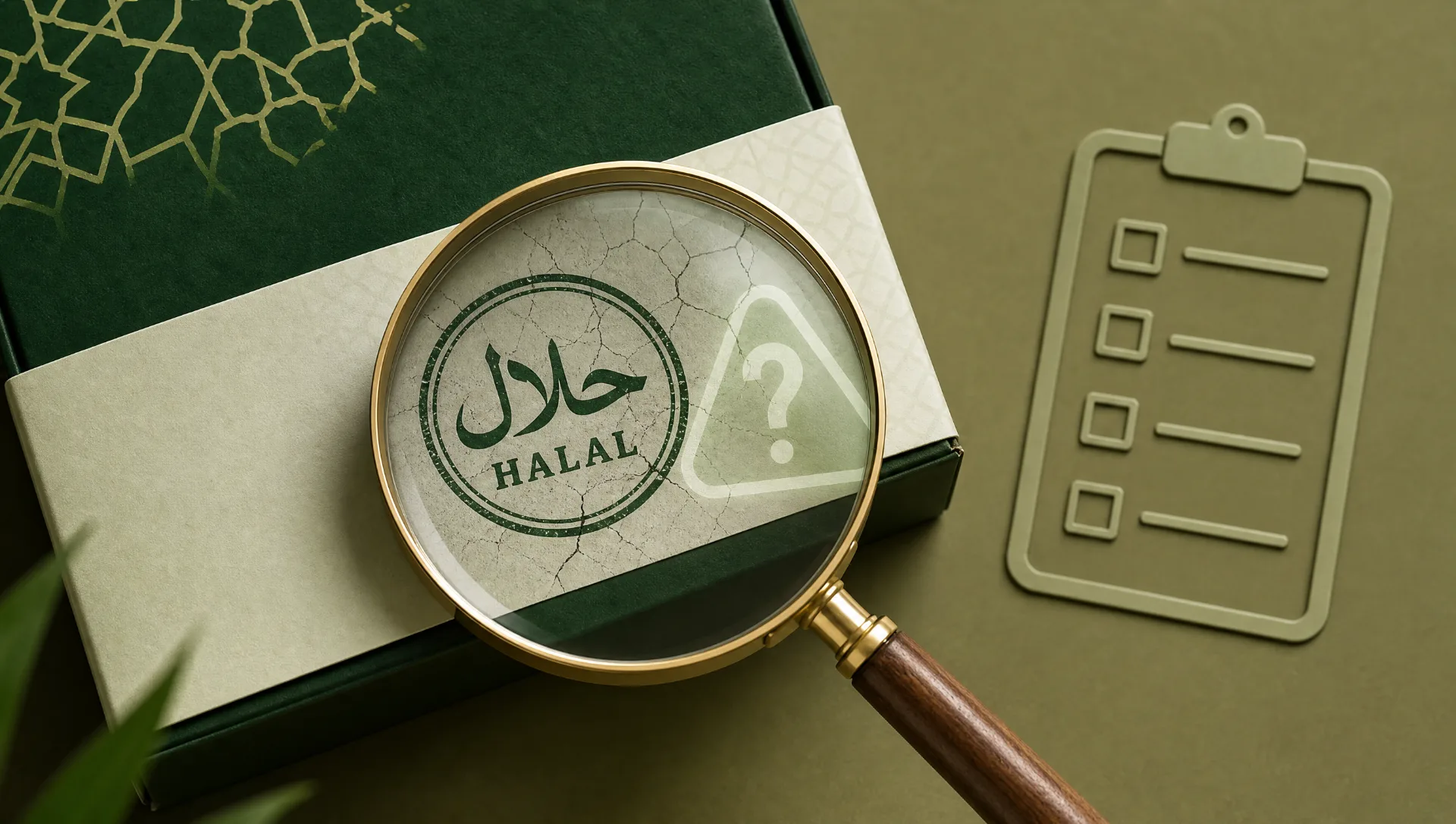
How to spot a fake halal label: warning signs
With the rise in products labeled halal, it has become essential to distinguish genuine certifications from misleading labels. Discover the five major warning signs to identify a fake halal label and consume with peace of mind.
L'équipe Muslim Map
Guides halal & voyages musulmans · Mis à jour le 7/18/2026
The global market for halal food is experiencing rapid growth. Unfortunately, this expansion attracts unscrupulous players who place misleading claims on their packaging to appeal to Muslim consumers.
For the consumer, vigilance is key. Learning to identify rigorous certifications and detect anomalies helps guarantee the religious and ethical compliance of your purchases.
Here are the five major warning signs that should make you wary of a halal label.
The 5 Warning Signs of an Unreliable Certification
1. The Absence of a Certificate Number or Traceability
A serious halal certification body (HCB) always assigns a unique certification number to the approved product or producer. This number makes it possible to link the physical product directly to an official document certifying its compliance.
If the packaging simply displays a logo without any identification, batch, or license number, the traceability is broken. A genuine label allows you to trace back to the date of slaughter or manufacture.
2. An Untraceable or Non-Existent Certification Body
Some unscrupulous manufacturers invent organization names out of thin air to reassure customers. A quick internet search should allow you to find the official website of the organization mentioned on the label.
If the certification body does not have an active website, clear legal notices, a verifiable physical address, or a telephone contact, its credibility is highly questionable. These are frequently ghost structures created solely to sell labels.
3. The Use of Self-Certification
Self-certification consists of an industrialist or retailer declaring themselves that their products are halal, without the intervention of an independent third party.
This practice often manifests as the simple written mention "Halal" or "Certified halal by the company" on the packaging. Without external control by a third-party organization, this mention has no legal or religious value, as the manufacturer becomes both judge and jury.
4. A Generic or Royalty-Free Logo
Many packages feature logos with a crescent moon, a mosque, or generic Arabic calligraphy. These visuals are often downloaded for free from online image banks.
A reliable certification logo belongs to a registered trademark. It generally includes the full name of the organization (for example: AVS, Achahada, HMC, etc.) and does not settle for decorative illustrations.
5. The Absence of Independent Physical Inspectors
The reliability of an organization depends directly on its control methodology. The most rigorous bodies employ independent physical inspectors present on the slaughter and cutting sites.
If the organization's specifications (when public) indicate that it limits itself to annual documentary audits or pre-announced visits, the risk of mixing or non-compliance during the rest of the year is particularly high.
Comparative Table: Genuine Label vs. Suspicious Practice
| Verification Criterion | Reliable Certification ✅ | Risk of Fraud or Laxity ❌ |
|---|---|---|
| Traceability | Approval and batch number verifiable online | Simple mention without any reference code |
| Independence | Audit and control by an independent third-party body | Self-declaration by the manufacturer on the label |
| On-site Presence | Permanent inspectors or regular surprise inspections | No physical control (paper-only audit) |
| Transparency | Specifications and control criteria available for consultation | Vague criteria or trade secrets mentioned |
| Legal Existence | Registered organization with real contact details | Structure untraceable online or without legal existence |
How to Adopt the Right Habits Daily?
To consume with complete peace of mind, a few simple habits can help you avoid the traps of misleading packaging.
- Favor recognized organizations: Learn to know the active labels in your country that regularly publish their reports and whose seriousness is recognized by the community.
- Consult databases: Many independent applications or community websites list products that are genuinely controlled.
- Question the manufacturer: Do not hesitate to send an email to a brand's customer service to ask for the name of its halal certification body. An evasive or absent response is an immediate warning sign.
In a butcher shop or restaurant, you are perfectly within your rights to ask to see the original halal certificate issued by the meat supplier. This document must be currently valid and correspond exactly to the slaughterhouse of origin.
FAQ: Frequently Asked Questions on Verification
Can we trust a product simply labeled in Arabic?
No. The Arabic language is a national and commercial language in many countries. The presence of Arabic writing on an imported or local product in no way indicates that a religious compliance check has been carried out.
What is a documentary audit?
A documentary audit consists of verifying only invoices and technical sheets of ingredients on paper. Although necessary, it is insufficient to guarantee the absence of cross-contamination or compliance with slaughter rites without a physical presence on the production line.
Are state halal labels reliable?
In several countries (such as Malaysia with JAKIM or Indonesia with MUI), certification is regulated by the state with very strict criteria. In Europe, certification is private, which explains the coexistence of organizations with very disparate levels of requirements.
Muslim Map
🕌 Trouvez des adresses halal près de vous
Explorez la carte, filtrez par certification et découvrez les avis de la communauté.