

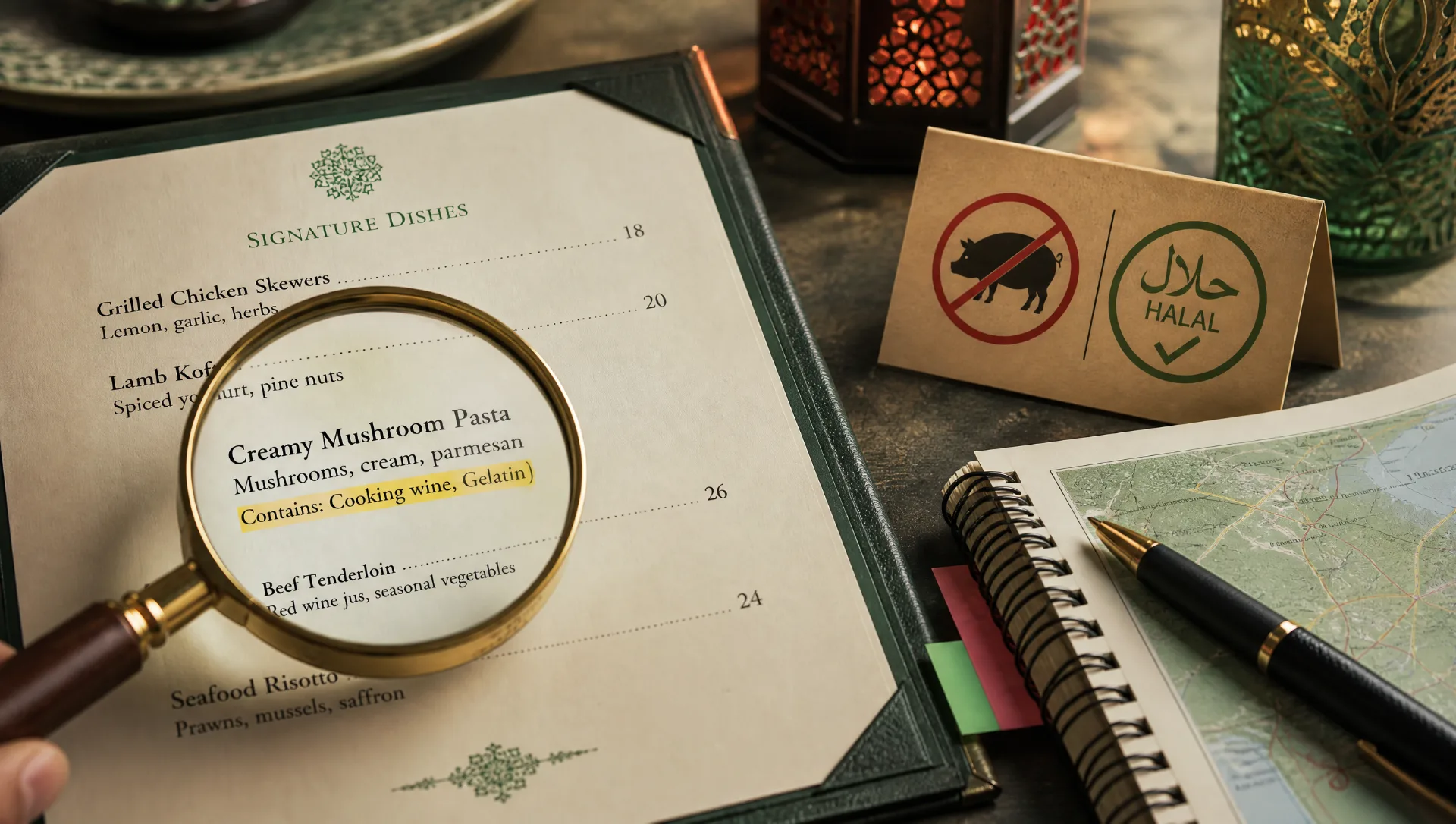
Halal Travel: 5 Common Mistakes and How to Avoid Them
Traveling abroad requires careful preparation for the Muslim traveler. Discover the 5 most common mistakes, from the 'pork-free' trap to hidden ingredients, and learn how to travel with peace of mind.
L'équipe Muslim Map
Guides halal & voyages musulmans · Mis à jour le 7/25/2026
Traveling is an enriching experience, but for the Muslim traveler, it requires extra vigilance. From confusing "pork-free" with halal to hidden ingredients, certain mistakes can disrupt your trip.
Here is a comprehensive guide to identifying these pitfalls and adopting best practices for your next adventures.
1. Confusing "Pork-Free" with Halal
This is the most common mistake among beginner travelers. Thinking that a vegetarian, fish, or "pork-free" labeled dish is automatically suitable can lead to unpleasant surprises. The slaughter method of meat (beef, chicken) and the risks of cross-contamination in the kitchen are often overlooked.
Real-life example: During a trip to Tokyo, Soufiane orders vegetarian ramen in a standard restaurant. He later discovers that the broth, although free of meat pieces, was prepared using pork bones and animal fat to give it flavor.
Best practice
Do not rely solely on verbal assurances from kitchen staff, who may not always understand the strict requirements of halal. Opt instead for establishments that offer a strict vegan option or have official certification.
Veganism excludes all animal-derived products. In the absence of certified halal options, a 100% vegan certified dish is a safe alternative (no meat, no animal fat, no gelatin).
2. Ignoring Cooking Alcohol and Sauces
Many travelers believe that prolonged cooking completely eliminates alcohol. However, studies show that traces of alcohol always remain after cooking (up to 40% after 15 minutes of simmering). Furthermore, many Asian or European sauces structurally contain alcohol.
Real-life example: On vacation in Rome, Ines orders a mushroom risotto. She doesn't realize that the traditional Italian recipe systematically starts by deglazing the rice with a glass of white wine.
Best practice
Ask specific questions using the local language. Ask if the dish contains wine, beer, mirin, or sake.
| Risk Ingredient | Common Use | Safe Alternative |
|---|---|---|
| Mirin / Sake | Japanese cuisine (sauces, broths) | Plain soy sauce, rice vinegar |
| White / Red wine | Risottos, European simmered sauces | Neutral vegetable broth |
| Vanilla extract | Pastries, ice cream | Alcohol-free vanilla flavoring, fresh pod |
3. Blindly Trusting Self-Declared "Halal" Logos
In some non-Muslim countries, many businesses display a "Halal" sign in their window without holding official certification. Sometimes, this is a simple marketing tactic based on the owner's good faith, without any verification of meat suppliers.
Real-life example: In London, Youssef buys a kebab from a shop displaying a halal sticker. While chatting with the manager, he realizes that only the chicken meat is halal, while the beef comes from a standard non-certified supplier and is prepared on the same grill.
Best practice
Look for labels recognized by independent certification bodies (such as the Halal Food Authority in the UK or JAKIM in Malaysia).
Use dedicated halal travel apps (such as HalalTrip or Zabihah) to check verified reviews from the local community before heading out.
4. Neglecting Prayer Time Logistics
During a busy trip, it is easy to get overwhelmed by your sightseeing schedule. Without planning, you risk finding yourself on public transport or in the middle of a crowded tourist attraction at prayer time, with no clean place to perform it.
Real-life example: During an excursion in New York, Amina found herself stuck in the subway at Maghrib time. Due to a lack of preparation, she had to pray late in a noisy corner of a train station.
Best practice
Plan your itinerary around local mosques or identify quiet spaces (parks, quiet museums, libraries) in advance. Download a reliable prayer app with an offline Qibla compass.
Many major international airports and shopping malls now have multi-faith prayer rooms (Prayer rooms). Remember to check their location as soon as you arrive.
5. Underestimating Hidden Animal-Derived Additives
Food additives are everywhere, especially in processed products, snacks, and desserts. Pork gelatin, carmine (E120), or certain emulsifiers (E471) of unspecified animal origin are commonplace abroad.
Real-life example: Fatoumata buys fruit candies in a supermarket in Munich for her children, thinking that the absence of meat in the ingredients was enough. The package actually contained pork gelatin (simply labeled Gelatine).
Best practice
Learn to decipher local labels or use an instant translator on your smartphone.
- Do: Look for "Suitable for vegetarians" labels (often an indicator of no animal gelatin, though you should still check for alcohol).
- Avoid: Buying processed products without a clear and translatable ingredients list.
FAQ
Can I eat fish anywhere without worry?
Generally speaking, raw or plain fish is halal. However, pay attention to cooking methods: frying in the same oil as non-halal products, or the use of sauces containing alcohol or gelatin.
How do I know if a cheese is halal abroad?
Some cheeses require animal rennet to coagulate the milk. If the rennet comes from an animal not slaughtered according to Islamic rites (or from pork), the cheese is not halal. Opt for cheeses that use microbial or vegetable rennet (often indicated on European packaging).
Do airlines always offer halal meals?
No, it is not automatic. You must order your halal meal (code MOML - Halal Meal) at least 24 to 48 hours before your flight via the airline's website, otherwise you will receive the standard meal.
— Key takeaways for your next trip
- Prepare a list of food keywords in the language of your destination country.
- Download travel assistance apps (translation, qibla, certified restaurants).
- If in doubt, opt for the strict vegetarian/vegan option.
Muslim Map
🕌 Trouvez des adresses halal près de vous
Explorez la carte, filtrez par certification et découvrez les avis de la communauté.