

Halal in Malaysia: Why are Water, Toothpaste, or Shampoo Certified Halal?
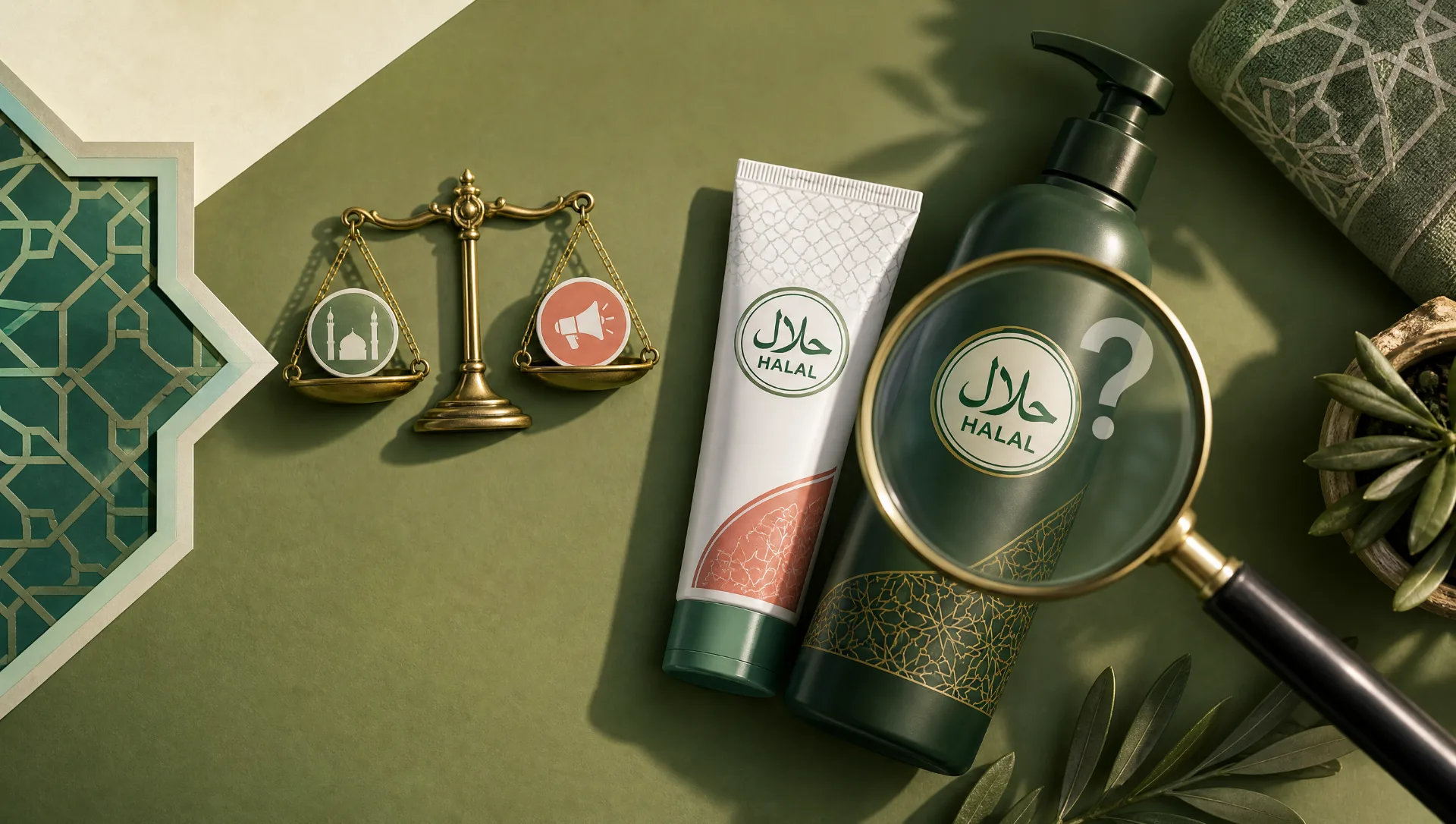
In Malaysia, the halal logo is displayed on water bottles, toothpaste, and shampoo. Deciphering a largely marketing-driven phenomenon, and a reminder of the true Islamic criteria: the absence of riba and respect for dhabihah.
L'équipe Muslim Map
Guides halal & voyages musulmans · Mis à jour le 7/20/2026
In Malaysia, it is not uncommon to find a "halal" logo on a bottle of mineral water, a tube of toothpaste, a bottle of shampoo, or even toilet paper. For a non-Malaysian Muslim visitor, the surprise is often the same: why certify halal a product that, by its very nature, contains nothing illicit?
Behind this phenomenon lies an intersection of commercial strategy, a national regulatory framework, and confusion over what Sunni Islam actually requires. This article distinguishes between what is marketing and what constitutes the true criteria of permissibility (halal) in Islam.
The Malaysian Context: A Label That Has Become a Commercial Argument
Malaysia is one of the few countries in the world with a centralized, state-run halal certification system, managed by JAKIM (Jabatan Kemajuan Islam Malaysia — Department of Islamic Development Malaysia). The official halal logo is internationally recognized and considered one of the strictest.
In this context, halal certification has become:
- a marketing argument to reassure a majority-Muslim population (about 63% of Muslims in Malaysia);
- a competitive advantage over non-certified products, even those identical in composition;
- an export passport to other majority-Muslim markets (Indonesia, the Gulf, North Africa).
As a result, manufacturers certify products that structurally have no issue with permissibility, simply because the absence of a logo is perceived as a negative signal by the consumer.
Water, Toothpaste, Cosmetics: What Does Islam Actually Say?
Mineral Water
Water is halal by nature. It is indeed the purest beverage, mentioned multiple times in the Quran as a sign of Allah's mercy. Certifying an unflavored bottle of mineral water as halal is therefore purely marketing: there is no realistic scenario where bottled water would become illicit from an Islamic perspective.
Toothpaste and Cosmetics
Here, a debate exists, but it is often exaggerated. Some toothpastes or cosmetics may contain:
- glycerin or fatty acids of unspecified animal origin;
- alcohol (ethanol) used as a solvent.
Contemporary scholars differ, but the majority position within the four Sunni schools considers that:
- alcohol used as an industrial solvent (not intended for drinking) does not make the product illicit;
- animal derivatives that have undergone a complete chemical transformation (istihala) change their legal status.
In practice, standard commercial toothpaste is permissible for the vast majority of Muslims. The halal logo on it offers reassurance but does not reflect an imperative religious requirement.
Shampoo and Hygiene Products
The same logic applies: unless there is an explicitly problematic composition (identifiable pork fats, for example), a shampoo poses no issue of permissibility. The debate sometimes shifts to the question of prayer — would a product containing pork make the skin impure? — but the majority position holds that after rinsing, there is no issue regarding the validity of ablutions or prayer.
The Two True Criteria of Permissibility in Sunni Islam
While halal certification on a bottle of water is essentially a commercial argument, where do the true stakes of permissibility lie in a Muslim's life? Two areas clearly dominate in classical and contemporary sources.
1. The Absence of Riba (Usurious Interest) in Financial Transactions
Riba — often translated as "usurious interest" — is one of the most severely condemned sins in the Quran and the Sunnah. Allah says:
"Those who consume interest cannot stand [on the Day of Resurrection] except as one stands who is being beaten by Satan into insanity." — Surah Al-Baqarah, 2:275
And the Prophet ﷺ cursed in an authentic hadith:
"...the one who accepts riba, the one who pays it, the one who records it, and the two witnesses to it; they are all equal." — Narrated by Muslim
This concerns:
- interest-bearing loans (mortgages, consumer loans, revolving credit cards);
- savings accounts yielding a fixed interest rate;
- certain bonds and conventional financial instruments.
For a Muslim, avoiding riba in daily transactions is infinitely more decisive than checking the halal logo on their shampoo. Yet, this is a subject largely absent from supermarket shelves.
2. Strict Adherence to Dhabihah for Meat
Dhabihah (or dhabh) refers to the slaughter ritual prescribed by Islam. For meat to be permissible, several conditions must be met simultaneously, according to the four Sunni schools:
- The animal must be alive at the time of slaughter (prohibition of carrion, mayta).
- The slaughterer must be a Muslim, or according to several schools, belong to the practicing People of the Book (Ahl al-Kitab).
- The name of Allah must be invoked at the precise moment of slaughter: "Bismillah, Allahu Akbar."
- The bleeding must be complete: a swift cut to the trachea, esophagus, and the two jugular veins with a sharp knife, allowing full evacuation of the blood.
- The animal must not be irreversibly stunned before slaughter — a point of debate regarding reversible electric stunning.
The species concerned are well-identified: cattle, sheep, goats, camels, and poultry. Pork and its derivatives are strictly forbidden (Surah Al-Ma'idah, 5:3), as are carnivores, birds of prey, and animals that die without ritual slaughter.
It is here, in the butcher shop, deli, catering, and industrial processing, that halal certification has a true religious meaning. A halal logo on a piece of meat attests (in principle) that the entire chain — from slaughterhouse to packaging — respects dhabihah. This is incomparably more significant than stamping a bottle of water.
Putting Priorities Back in Order
The proliferation of halal logos on neutral products has several adverse effects:
- It dilutes the impact of the label: when everything is certified halal, the consumer no longer distinguishes between what is so by nature and what is so through a genuine process.
- It diverts attention from the real issues: a Muslim might buy "certified halal" toothpaste while taking out an interest-bearing mortgage, which is infinitely more serious from a religious standpoint.
- It turns halal into a commercial argument rather than a spiritual framework: the seal becomes a marketing differentiation tool, not a criterion of fidelity to Divine Law.
In a Sunni reading faithful to the sources, the hierarchy is clear:
- Avoid riba in one's finances (loans, savings, investments).
- Consume properly slaughtered dhabihah meat.
- Avoid explicitly forbidden substances (pork, alcohol intended for drinking, carrion).
- Occasionally check for animal derivatives or ethanol in certain processed products — without making it an obsession.
The rest — water, toothpaste, soap, shampoo — falls, in the overwhelming majority of cases, under commercial convenience, not religious obligation.
Conclusion
Malaysia has built an impressive, exportable, and lucrative halal ecosystem. However, the abundance of logos on products with no real religious stakes must not obscure the fundamental truth: what makes a Muslim compliant with their religion is not the accumulation of seals in their shopping cart, but the avoidance of riba in their wallet and the respect for dhabihah on their plate.
A label on a bottle of water does not replace an honest review of one's financial transactions. And a certified shampoo will never erase the unlawfulness of an interest-bearing loan.
FAQ
Can bottled water really become illicit (haram)?
No, unflavored and additive-free mineral or spring water is halal by nature. No classical Sunni school foresees a scenario where it would become illicit. Halal certification on a bottle of water is therefore a matter of marketing, not a religious requirement.
Is toothpaste containing alcohol haram?
The majority position of Sunni schools holds that alcohol used as an industrial solvent — not intended for drinking — does not make a product illicit, especially when present in very small quantities and when it evaporates or is rinsed away.
Why does Malaysia certify so many products as halal?
Because halal there is simultaneously a demand from a majority-Muslim consumer base, a regulatory framework managed by JAKIM, and a powerful export lever. This drives manufacturers to certify even products that structurally do not need it.
What actually matters for being halal-compliant in Sunni Islam?
Two areas clearly dominate: the absence of riba (usurious interest) in financial transactions, and strict adherence to dhabihah (the Islamic slaughter ritual with the invocation of Allah's name and complete bleeding) for meat. These are the classical priorities mentioned in the Quran and the Sunnah.
Is halal certification useless then?
No, it has real meaning for meat, cold cuts, catering, and processed products potentially containing animal derivatives or alcohol. It is its extension to neutral products (water, paper, basic cosmetics) that raises questions and is primarily a marketing matter.
Muslim Map
🕌 Trouvez des adresses halal près de vous
Explorez la carte, filtrez par certification et découvrez les avis de la communauté.