

Islam in Tokyo: Being Muslim in a Country Without an Islamic Tradition
A very small community (expatriates, students, converts), a handful of mosques including the famous Tokyo Camii: the concrete daily life of a Sunni Muslim in Japan, between dietary challenges and practical solutions.
L'équipe Muslim Map
Guides halal & voyages musulmans · Mis à jour le 7/15/2026
Islam in Tokyo: Being Muslim in a Country Without an Islamic Tradition
🇯🇵 Unlike London, Kuala Lumpur, or Cairo, Tokyo has never been a Muslim city. Japan has no historical Islamic tradition, and the local Muslim community remains numerically tiny. However, living as a Muslim in Tokyo is now more accessible than ever.
A Recent and Small Community
Around 200,000 Muslims live in Japan in 2026, out of 123 million inhabitants — which is 0.16%. In Tokyo, there are a few tens of thousands of people, divided among:
- Foreign students (Malaysia, Indonesia, Bangladesh, Pakistan, Arab countries).
- Expatriate workers (finance, engineering, catering, industry).
- Converted Japanese women.
- Descendants of the first migration wave (often Turkish or Tatar, arriving in the 1920s).
A Sunni Islam in its Fundamentals
- Southeast Asian communities (Malaysia, Indonesia) → Shafi'i school.
- Pakistani and Bangladeshi communities → Hanafi school.
- Arab communities → variable (Shafi'i, Maliki, Hanbali).
- Japanese converts → generally attached to the mosque that trained them.
💡 Without an official structure, religious life is organized around a few mosques and multiple musallas.
Mosques in Tokyo
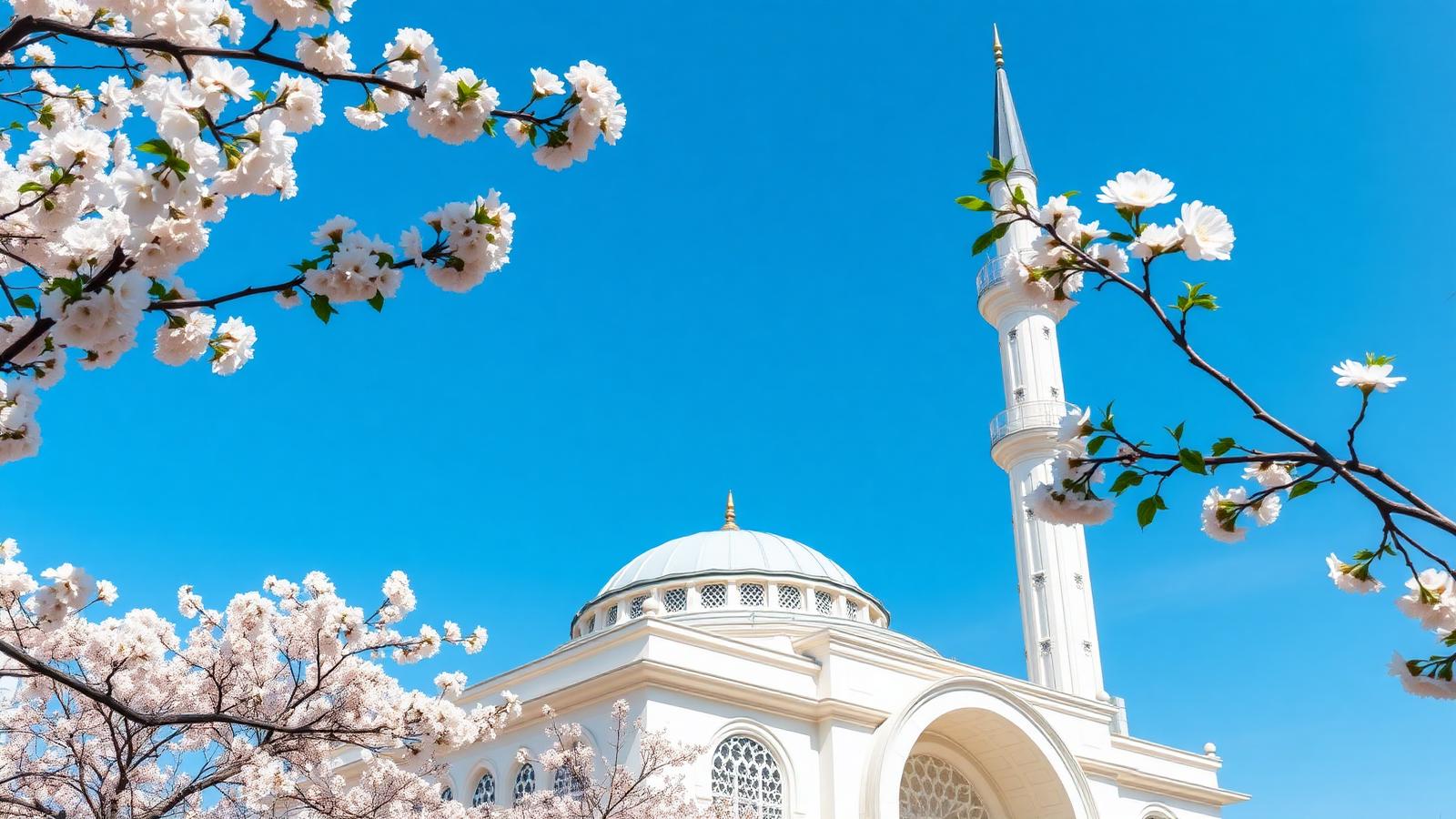
Tokyo Camii (Shibuya, Ōyama)
The most iconic. Rebuilt in 2000 in a classic Ottoman style with the support of the Turkish Diyanet:
- Magnificent main prayer hall, calligraphy on the ceiling.
- Capacity of 2,000 worshippers.
- Turkish-Islamic Cultural Center (language courses, Quran, exhibitions).
- Small grocery store and halal restaurant nearby.
- Very welcoming to Japanese visitors.
It is the main venue for jumu'ah and Eid celebrations, bringing together Turks, Indonesians, Pakistanis, Arabs, and Japanese.
Otsuka Mosque (Toshima)
Managed mainly by the Indonesian and South Asian community. A more intimate atmosphere, highly frequented by students.
Al-Nur Mosque (Asakusa)
Small structure managed by Arab and South Asian Muslims.
Assalaam Foundation (Setagaya)
Community center: mosque, weekend school, halal grocery store, catering.
A dozen neighborhood musallas
Set up in commercial or community premises, especially around universities (Waseda, Todai).
Dietary Challenges
Japan is culturally non-halal:
- Pork and alcohol are omnipresent in the cuisine.
- Mirin (cooking alcohol) and sake are in almost all sauces (ramen, sushi, tempura, teriyaki).
- Dashi (broth) is often complex to verify.
Concrete Solutions
- Hundreds of halal restaurants today in Tokyo, mainly in Shinjuku, Shibuya, Roppongi, Asakusa, Akihabara.
- Halal Ramen: Shinjuku Gyoen Ramen Ouka, Ayam-Ya, Naritaya.
- Halal Sushi: a few establishments around Tokyo Camii.
- Apps: Halal Gourmet Japan, Halal Navi, Muslim Pro.
- Halal Grocery Stores: around Tokyo Camii, in Shin-Ōkubo, in Nishikasai.
⚠️ Warning: "Muslim-friendly" ≠ halal. Always check the certification (JMA, MPJA, Malaysia Halal).
Prayer and Public Space
- Airports: Haneda and Narita have multi-faith prayer rooms.
- Major Stations: "multi-purpose" spaces that can be used discreetly.
- International Hotels: more and more offer prayer mats, qibla direction, and adapted rooms.
- International Offices: some multinational companies offer a dedicated room.
Many Muslims pray in a quiet corner of the office, on a park bench, or wait until they get home / to the mosque.
Ramadan in Tokyo
- Long days in summer (up to 16 hours).
- No social adaptation: work and school hours remain unchanged.
- Community Iftars at Tokyo Camii, Otsuka Mosque, and the Gulf and Malaysian embassies.
- Special menus in halal restaurants.
- An intimate experience, with family or in a tight-knit circle.
Transmission
Without official Muslim schools, transmission happens via:
- Weekend schools in major mosques.
- Community WhatsApp groups.
- Online courses (Quran, Arabic, fiqh).
- Trips back home for holidays.
- Summer camps organized by certain mosques.
Islam and Japanese Society
- Little cultural hostility: a polite society, respectful if practice remains discreet.
- Little knowledge: most Japanese people only have a superficial understanding of Islam.
- No institutionalized discrimination, but some practical obstacles.
- Image is improving thanks to the opening up to Muslim tourism.
Tips for a Stay in Tokyo
- Book near a mosque or a halal area (Shinjuku, Shibuya, Asakusa).
- Install Halal Gourmet Japan and Muslim Pro.
- Bring a travel prayer mat and a qibla compass.
- Visit Tokyo Camii — even just for the architectural beauty.
- Inform your hotel of your needs in advance.
FAQ
Are there many mosques in Tokyo?
Only a handful: Tokyo Camii, Otsuka, Al-Nur, and a few community centers.
Is it difficult to eat halal in Tokyo?
Less than before: there are several hundred halal restaurants today.
Is the community Sunni?
Yes, in its vast majority (Malaysia, Indonesia, Pakistan, Bangladesh, Arab countries).
Can you visit Tokyo Camii?
Yes, it is open to non-Muslim visitors outside of prayer times. Decent clothing is required.
Muslim Map
🕌 Trouvez des adresses halal près de vous
Explorez la carte, filtrez par certification et découvrez les avis de la communauté.