Finding a mosque in Thailand: a practical guide for travelers
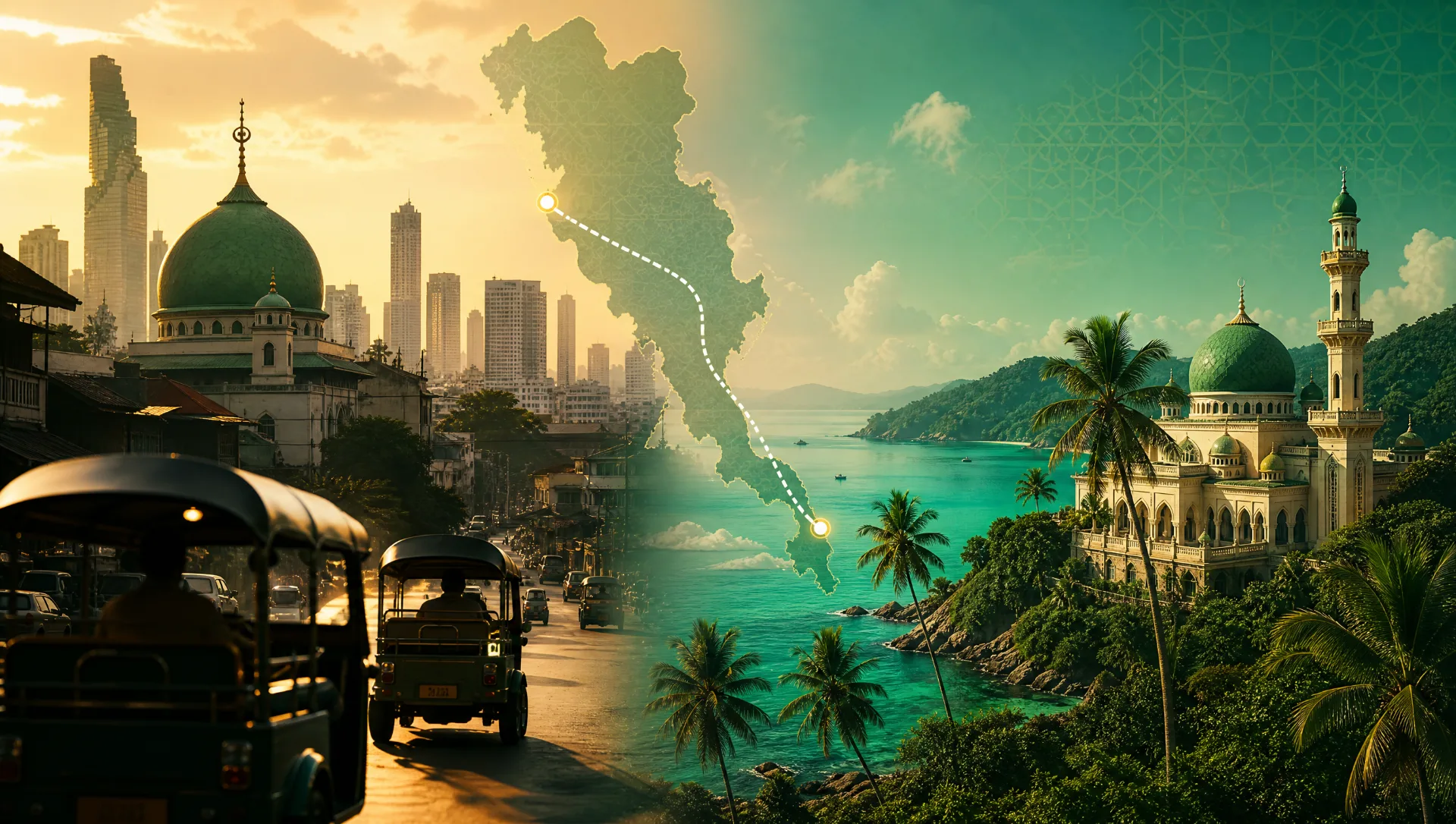
Discover how to locate mosques in Thailand during your trip. This guide compares urban options in Bangkok with the Muslim-majority southern provinces to make your daily prayers easier.
L'équipe Muslim Map
Guides halal & voyages musulmans · Mis à jour le 7/20/2026
Traveling to Thailand as a Muslim is made easier by the historic presence of a vibrant Islamic community. Whether you are exploring the megacity of Bangkok or the beaches of the South, access to places of worship varies considerably from one region to another. This guide helps you locate mosques and understand these regional specificities.
The Islamic Landscape in Thailand: A Dual Reality
Thailand has more than 4,000 mosques, mainly concentrated in the southern peninsula. Islam is the country's second-largest religion, representing about 5 to 6% of the overall population.
There is a major distinction between the nationwide Buddhist majority and the strong Muslim presence in certain localities. For travelers, the experience of searching for a mosque will be completely different depending on whether they are in the capital or in the provinces bordering Malaysia.
Finding a Mosque in Bangkok: The Urban Experience
In Bangkok, Muslims represent a cosmopolitan minority. Mosques there are often nestled in the heart of historic neighborhoods, along ancient canals (khlongs) or in the narrow alleyways called sois.
The local community descends from Arab, Indian, Persian, or Malay merchants who settled there over the centuries. To locate these places of worship, you often have to venture away from the main commercial avenues and head deep into traditional residential neighborhoods.
Haroon Mosque
- Address: Charoen Krung Soi 36, Bang Rak, Bangkok
- Access: Near the Chao Phraya River and the French Embassy
- Special Feature: One of the oldest and most vibrant in the city, Friday sermons are often translated into English.
Other areas like Ramkhamhaeng, Pratunam, or the historic district of Thonburi (home to the famous Tonson Mosque) also have a high density of places of worship and halal-certified restaurants.
The Southern Provinces: Islam at the Heart of Daily Life
In the southern provinces such as Pattani, Yala, Narathiwat, and Satun, the landscape changes radically. Here, Islam is the majority religion of the population, which is primarily of Malay ethnic origin.
Mosques, locally called masjid, are an integral part of the daily landscape. Their domes and minarets dominate the villages, and the call to prayer (adhan) echoes publicly five times a day through loudspeakers.
The architecture there is remarkable, blending Middle Eastern influences with traditional Malay wooden art. The Pattani Central Mosque, built in 1954, is the most famous example, with a style reminiscent of the Taj Mahal.
Major Differences: Bangkok vs. Southern Provinces
To help you plan your travels, here is a comparison of religious infrastructure between the capital and the southern regions:
| Criterion | Bangkok (Urban Area) | Southern Provinces |
|---|---|---|
| Mosque Density | Moderate, concentrated in specific neighborhoods | Very high, present in every village |
| Visibility | Often hidden in narrow alleys (sois) | Highly visible, monumental architecture |
| Call to prayer (adhan) | Generally internal or very discreet | Public and audible in all localities |
| Community Languages | Thai, Arabic, sometimes English | Thai and Patani Malay (Yawi) |
| General Atmosphere | Integrated into a Buddhist metropolis | Lifestyle paced by the Islamic calendar |
Practical Tips for Muslim Travelers
To optimize your stay and respect local customs, here are some essential recommendations:
Search Tip: On Google Maps or local GPS apps, search for the Thai word "Masjid" (มัสยิด) rather than the English word "Mosque". You will get much more accurate and comprehensive results.
Dress Code: Even in tourist areas of the South, mosques require modest dress. Men must cover their knees and shoulders, and women must wear a hijab and loose-fitting clothing.
- Prayer Rooms (Musolla): In major airports (Suvarnabhumi and Don Mueang) and certain shopping malls in Bangkok (such as the MBK Center), dedicated and well-equipped prayer spaces are accessible free of charge.
- Seasonality: During the month of Ramadan, nightlife and dining options in the South transform completely, with a unique excitement at the time of breaking the fast (iftar).
FAQ
Do women have access to prayer spaces in Thai mosques?
Yes. The vast majority of mosques in Thailand, whether in Bangkok or the South, have a prayer space reserved for women, often located upstairs or separated by a curtain.
Is it easy to find halal food near mosques?
Absolutely. In Thailand, the presence of a mosque almost systematically guarantees the presence of food stalls or halal restaurants run by local Muslim families in the immediate vicinity.
Are the southern provinces easily accessible to tourists?
Satun Province and the island of Koh Lanta (with a large Muslim population) are very touristy and easy to access. On the other hand, the deep South provinces (Pattani, Yala, Narathiwat) require checking local security conditions beforehand before planning independent travel.
Muslim Map
🕌 Trouvez des adresses halal près de vous
Explorez la carte, filtrez par certification et découvrez les avis de la communauté.