How to find halal food in a non-Muslim country
Traveling to a non-Muslim country does not have to be an obstacle to your diet. Discover our practical methods, from specialized apps to community networks, to easily identify reliable halal options during your trips abroad.
L'équipe Muslim Map
Guides halal & voyages musulmans · Mis à jour le 7/16/2026
Exploring new cultures is an enriching experience, but it can quickly become a challenge for Muslim travelers mindful of their diet. In countries where Islam is not the majority religion, finding meals that comply with ethical and religious rules requires a minimum of preparation.
Fortunately, thanks to technology and community solidarity, it is now easier to get organized. Here are our practical tips for traveling with peace of mind.
📱 Mobile apps: your best allies
The first instinct of the modern traveler is to turn to their smartphone. Several applications greatly facilitate the search for suitable shops and restaurants.
Muslim Map and collaborative directories
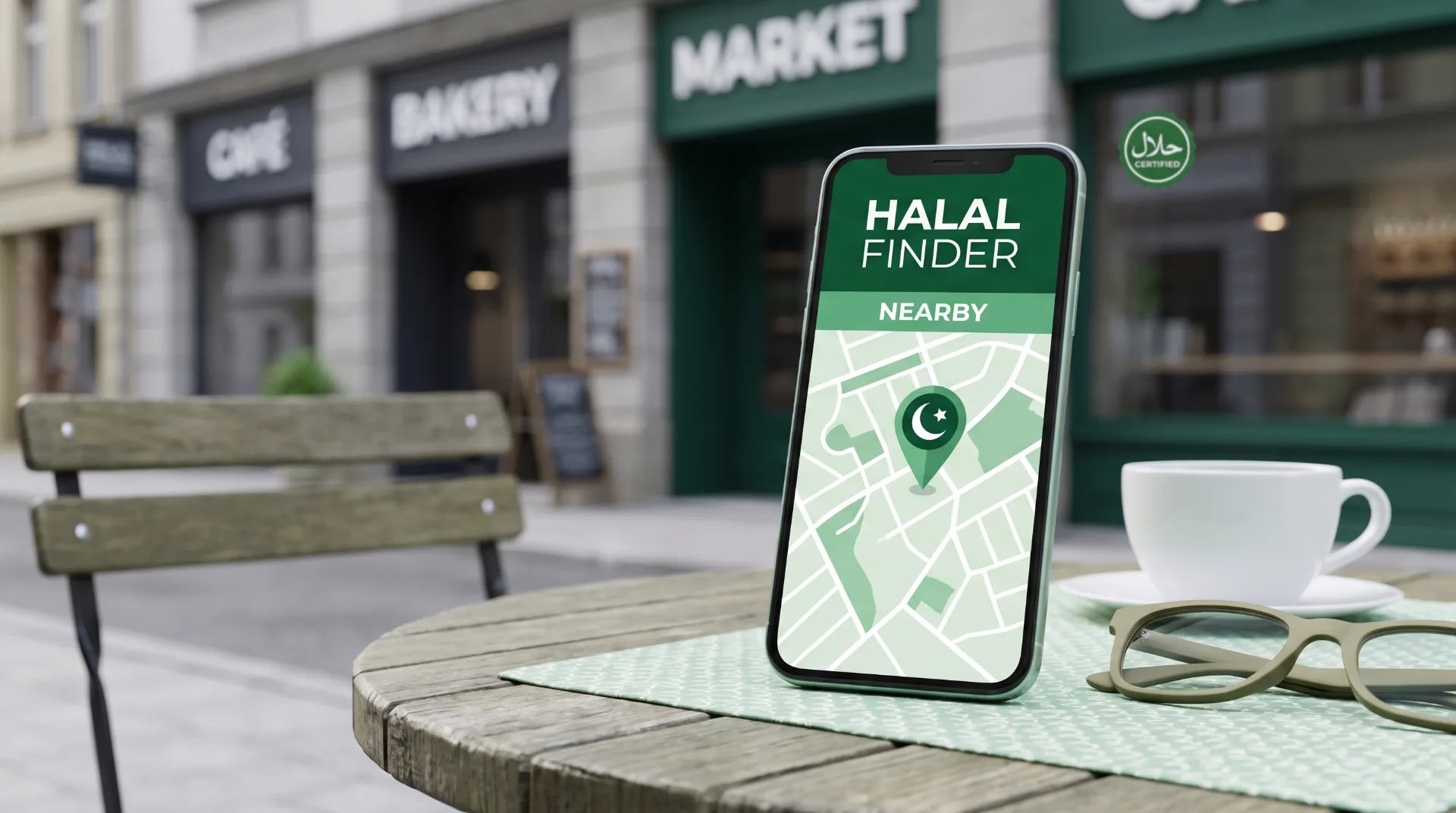
The Muslim Map app stands out as a key tool for geolocating halal establishments, mosques, and local shops. Thanks to a collaborative database, it allows you to quickly view the available options around you, complete with customer reviews to verify the reliability of the addresses.
Other global applications like Zabihah or even using specific filters on Google Maps (by simply typing "halal" or "halal food") allow you to clear the ground as soon as you arrive at the airport.
Think offline! Download the map of your destination city on Google Maps before leaving. This way, you can search for saved addresses even without an internet connection or a local SIM card.
🕌 Mosques: the heart of the local community
Places of worship are not just spaces for prayer; they also serve as genuine centers of social life and mutual aid for Muslim minorities.
A geographical and informative landmark
Around major mosques in Western or Asian capitals, there is almost systematically an ecosystem of halal businesses. Whether it is butcher shops, specialty restaurants, or grocery stores selling imported products, you will find what you need.
- Talk to the locals: After performing an obligatory prayer, do not hesitate to greet the locals and politely ask them for recommendations.
- Check the bulletin boards: Mosque entrance halls often contain flyers, advertisements from partner businesses, or local certification lists.
🥩 The little-known tip: ask halal restaurants
If you are staying in a holiday apartment (like an Airbnb) and prefer to cook for yourself, finding certified raw meat in a standard supermarket can prove impossible.
Dare to ask at the counter
In many non-Muslim cities, halal butcher shops are rare or far from the center, while fast-food joints (kebabs, pizzerias, halal Asian restaurants) are easier to find.
Buying directly from the kitchen Many halal restaurant owners are happy to help travelers out by selling them a portion of their own stock of raw meat directly (chicken breasts, minced meat, marinated skewers). Do not hesitate to ask them politely during off-peak hours.
🔍 Deciphering labels and certifications
Each country has its own certification bodies, and standards can vary from one region to another. It is useful to know the local logos before doing your grocery shopping.
Comparative table of labels and alternatives
| Food Option | Safety Level | Points of Vigilance |
|---|---|---|
| Local Halal Label | Very high | Verify the credibility of the certification body on the internet. |
| Vegetarian / Vegan Option | High | Watch out for the presence of cooking alcohol (white wine, mirin) or gelatin. |
| Seafood | High | Ensure no animal fats are added during cooking. |
False friends in ingredients In English-speaking countries, look out for mentions of gelatin (often of porcine or non-halal bovine origin), lard, and shortening (which may contain animal fats).
📋 Summary: The Do's & Don'ts of traveling
✅ Do's
- Inquire about the practices of the main certification body in the host country.
- Favor neighborhoods with a highly cosmopolitan population (often rich in vegetarian or halal options).
- Learn how to say "no meat and no alcohol" in the local language.
❌ Don'ts
- Rely solely on a verbal sign without verifying the presence of a certificate or the consistency of the menu.
- Assume that the term "Kosher" systematically equates to halal, as slaughter rules and restrictions differ (notably regarding the use of wine).
FAQ
How do I explain my dietary restrictions at a restaurant without a language barrier?
The easiest way is to save a written note on your phone in the country's language (for example, in Japanese, Korean, or German) explaining precisely what you cannot consume (pork, alcohol, meat not slaughtered according to ritual). You will just have to show it to the server.
Are Kosher-certified products systematically Halal?
No. Although the two traditions share similarities (such as the exclusion of pork), classical Islamic jurisprudence does not automatically validate all kosher meats due to differences in blessing rituals and the use of alcohol in certain preparations.
What should I do if there are no halal shops nearby?
Head towards vegetarian, vegan, or fish restaurant options. This is an opportunity to discover local gastronomy from another angle, while respecting your beliefs.
By planning your research using tools like Muslim Map and daring to meet local communities, you will find that eating halal while traveling is often much simpler than it seems.
Muslim Map
🕌 Trouvez des adresses halal près de vous
Explorez la carte, filtrez par certification et découvrez les avis de la communauté.