

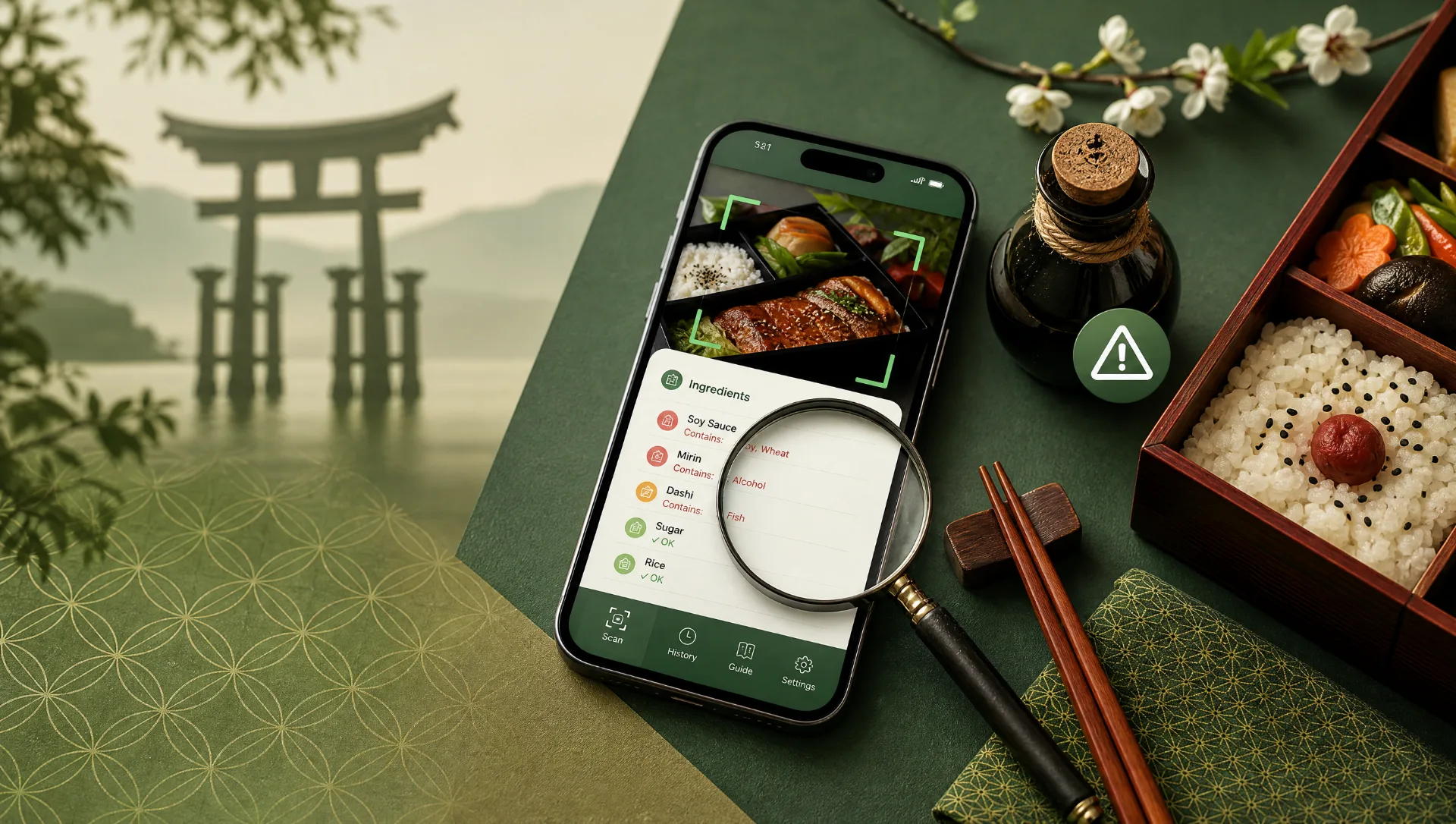
Halal travel to Japan: a survival guide for Muslims
Visiting Japan is an unforgettable experience, but eating there requires great vigilance. Discover the pitfalls of hidden ingredients, cross-contamination, and the essential apps for traveling with peace of mind.
L'équipe Muslim Map
Guides halal & voyages musulmans · Mis à jour le 7/18/2026
Japan is among the most popular destinations in the world for its unique culture and contrasting landscapes. However, for a Muslim traveler, food presents major challenges.
Between the omnipresent traditional alcohol and animal fats hidden in basic preparations, here is everything you need to know to consume halal in Japan.
Hidden Ingredients to Watch Closely
In Japan, cuisine prioritizes the balance of flavors, often achieved through complex preservatives or flavor enhancers. Even a dish that seems vegetarian or fish-based can contain forbidden products.
- Mirin (みりん): This sweet rice wine is the most difficult ingredient to avoid. It is systematically used to sweeten and add shine to sauces (teriyaki, sukiyaki, tempura sauce).
- Cooking Sake (料理酒 - Ryōrishu): This alcohol is used to tenderize meats and mask strong fish odors. It remains active in many sauces and broths after cooking.
- Gelatin (ゼラチン): Present in the majority of industrial desserts, ice creams, and convenience store (konbini) pastries. In Japan, gelatin is almost exclusively of porcine origin.
- Lard and animal fats: Often listed under the terms animal fat or shortening, they are used for the texture of breads, biscuits, and instant noodles.
The table below lists the essential kanji to look out for on product labels:
| Ingredient to avoid | Kanji / Kana | Common use |
|---|---|---|
| Pork | 豚肉 / ポーク | Ramen broths, meat dishes, gyoza |
| Cooking alcohol | 醸造アルコール | Preservative in fresh noodles, sauces |
| Mirin | みりん / 味 or | Base of sweet soy sauces, tsuyu broths |
| Gelatin | ゼラチン | Puddings, candies, matcha desserts |
| Animal fat | 動物油 / ショートニング | Sliced bread, biscuits, industrial pastries |
The Trap of Cross-Contamination
The concept of halal is not limited to the absence of pork on the plate. In Japan, cross-contamination is extremely common in non-certified restaurants.
Japanese kitchens are often small and optimized. Thus, French fries or vegetable tempuras are very often fried in the same oil as breaded pork cutlets (tonkatsu). Similarly, griddles (teppanyaki) and grills for skewers (yakitori) receive all types of meats without intermediate cleaning.
Watch out for dashi broths! Traditional dashi is made from dried bonito (fish) and kombu seaweed. However, the majority of restaurants today use industrial dashi powders that contain chicken or pork extracts to enhance the flavor.
Essential Apps for Scanning and Translating
To overcome the language barrier and decipher complex ingredient lists, several technological tools are essential to install before your departure.
1. Google Translate (Camera Mode)
This free tool allows you to instantly scan labels at the supermarket or konbini. Point your camera at the ingredient list to see the English translation appear. Actively search for keywords like "pork", "gelatin", or "alcohol".
2. Halal Japan (or Halal Navi)
Halal Japan is a very popular collaborative application. It lists thousands of everyday products sold in the archipelago. By simply scanning the barcode of an item, the app tells you if it is considered halal, doubtful, or haram based on its detailed composition.
Useful phrases to remember If you need to order in a classic restaurant, show this phrase to the waiter: "Butaniku to arukoru wa dame desu" (Pork and alcohol are forbidden to me). "Mirin ya ryōrishu wa haitte imasu ka ?" (Is there mirin or cooking sake in it?).
Where to Find Certified Restaurants?
Major metropolises like Tokyo, Osaka, and Kyoto have seen their halal offerings structured significantly in recent years to welcome tourists from Southeast Asia.
Practical resources for your meals
- Halal Gourmet Japan: The reference website and mobile application to locate certified halal restaurants or those offering adapted menus throughout the country.
- Key neighborhoods: In Tokyo, the Asakusa and Ueno districts concentrate a large number of certified halal ramen and curry restaurants.
- Prayer spaces: Large shopping centers (such as in Shibuya) and major airports (Haneda, Narita, Kansai) now have designated prayer rooms (Prayer Room).
FAQ
Can we eat bread from konbini (7-Eleven, Lawson, FamilyMart)?
Caution is advised. The majority of industrial sliced breads and pastries in Japan contain shortening (often based on pork or non-halal beef fat) or gelatin. Opt instead for bananas, hard-boiled eggs, or plain salt (shio) or tuna-mayonnaise onigiri (rice triangles), after verifying the absence of gelatin in the sauce.
Is traditional soy sauce always halal?
Traditional soy sauce ferments naturally, which produces a tiny amount of alcohol (often less than 1%). However, some industrial soy sauces include added alcohol as a preservative. For a total guarantee, look for soy sauces bearing a halal certification logo.
What does the term "Muslim Friendly" mean in Japan?
Unlike a strict halal certification, the term Muslim Friendly generally means that the restaurant offers a menu without pork and without table alcohol. However, the ingredients may come from non-certified suppliers and the kitchen may not be completely isolated from non-halal products. Ask specific questions about the preparation.
Muslim Map
🕌 Trouvez des adresses halal près de vous
Explorez la carte, filtrez par certification et découvrez les avis de la communauté.